
Self storage website features 2026 must focus on automated online rentals, AI-powered support, and seamless smart facility integration to meet evolving customer expectations. These tools ensure a frictionless user journey while driving conversions through real-time unit availability and dynamic pricing strategies.
Operating a self storage facility in today's market often feels like a race where the finish line keeps moving. You might have a functional website, yet you still watch potential tenants drop off before completing a rental or choose a competitor with a smoother interface. By 2026, the digital divide between industry leaders and those left behind will be defined by the user experience rather than just price or location. Modern tenants expect a level of sophistication that mirrors their favorite e-commerce platforms. If your site feels like a relic, you are likely losing revenue to more agile operators. This guide explores five essential website features every operator needs to dominate the local market. We will cover everything from frictionless mobile funnels and dynamic pricing to interactive maps, giving you a clear roadmap to stay competitive and maximize your occupancy in the evolving digital landscape.
The Evolution of Digital Self Storage: Preparing for 2026
The self-storage landscape is shifting toward a reality where your digital presence is the primary driver of revenue. By 2026, a website is no longer just a digital brochure; it is a full-service storefront capable of handling every stage of the tenant lifecycle. At StoragePug, headquartered in Boston, we monitor nationwide data that consistently shows a growing preference for speed and autonomy. Modern tenants do not want to wait for an office to open or navigate a complex phone tree just to get a quote.
The old way of doing business, which relied on "Call for Price" buttons and manual lease signings, is becoming a liability. In contrast, the 2026 way is defined by instant gratification, total transparency, and mobile accessibility. Consumers now expect to compare units, view real-time rates, and finalize a lease in under two minutes directly from their smartphone.
Implementing specialized web solutions allows operators to meet these expectations head-on. By leveraging effective online rental mechanisms, facilities can capture demand the moment it exists. As we look toward the necessary self storage website features 2026 demands, the goal is clear: remove every barrier between a prospective tenant and a locked unit. This evolution requires a pivot from passive information to active, autonomous commerce.
1. Frictionless Mobile First Rental Funnels
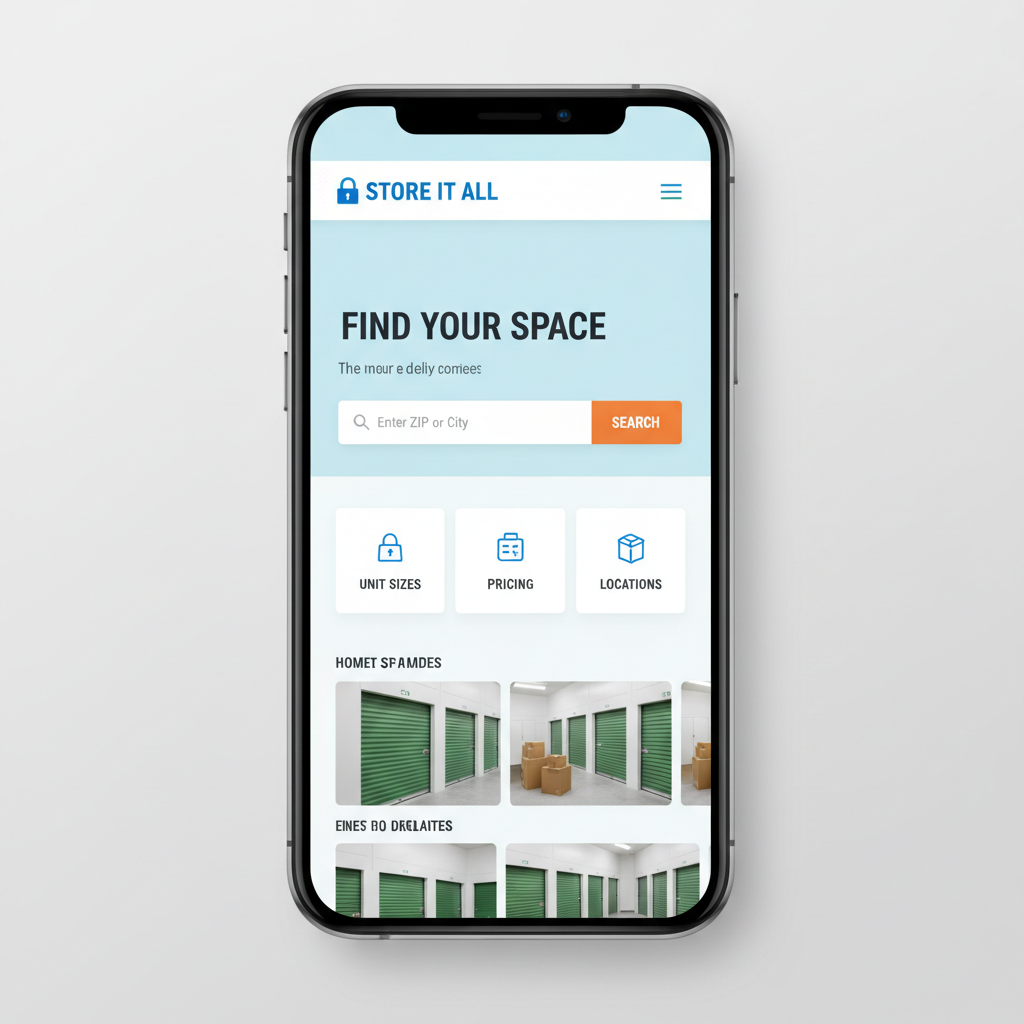
The transition from a passive website to a high-performance storefront begins with the device in the tenant's hand. While mobile-friendly design was the benchmark for the last decade, mobile-first is the non-negotiable standard for self storage website features 2026. This approach dictates that the entire rental journey is architected specifically for a five-inch screen rather than being scaled down from a desktop layout.
To capture modern tenants, the user interface (UI) must prioritize thumb-friendly navigation. Design elements should be positioned within the natural reach of a user's thumb, utilizing large, high-contrast buttons that eliminate the frustration of mis-taps. Efficiency is measured by the click-count required to move from the initial landing page to a fully executed lease. By integrating one-touch payment options like Apple Pay and Google Pay, operators can bypass the friction of a tenant needing to find a physical credit card while on the move.
This level of speed is critical for tenants in high-traffic urban environments like Boston or New York. A prospect standing on a sidewalk or commuting on the T expects to secure a unit in the time it takes for their train to arrive. Every additional form field or slow-loading page is a point of abandonment where a lead may bounce to a competitor. Utilizing effective online rental mechanisms ensures that the funnel is a straight line rather than a maze. By removing these digital hurdles, facilities can secure leases from users who prioritize autonomy and immediate results.
2. Real Time Dynamic Pricing and Unit Availability
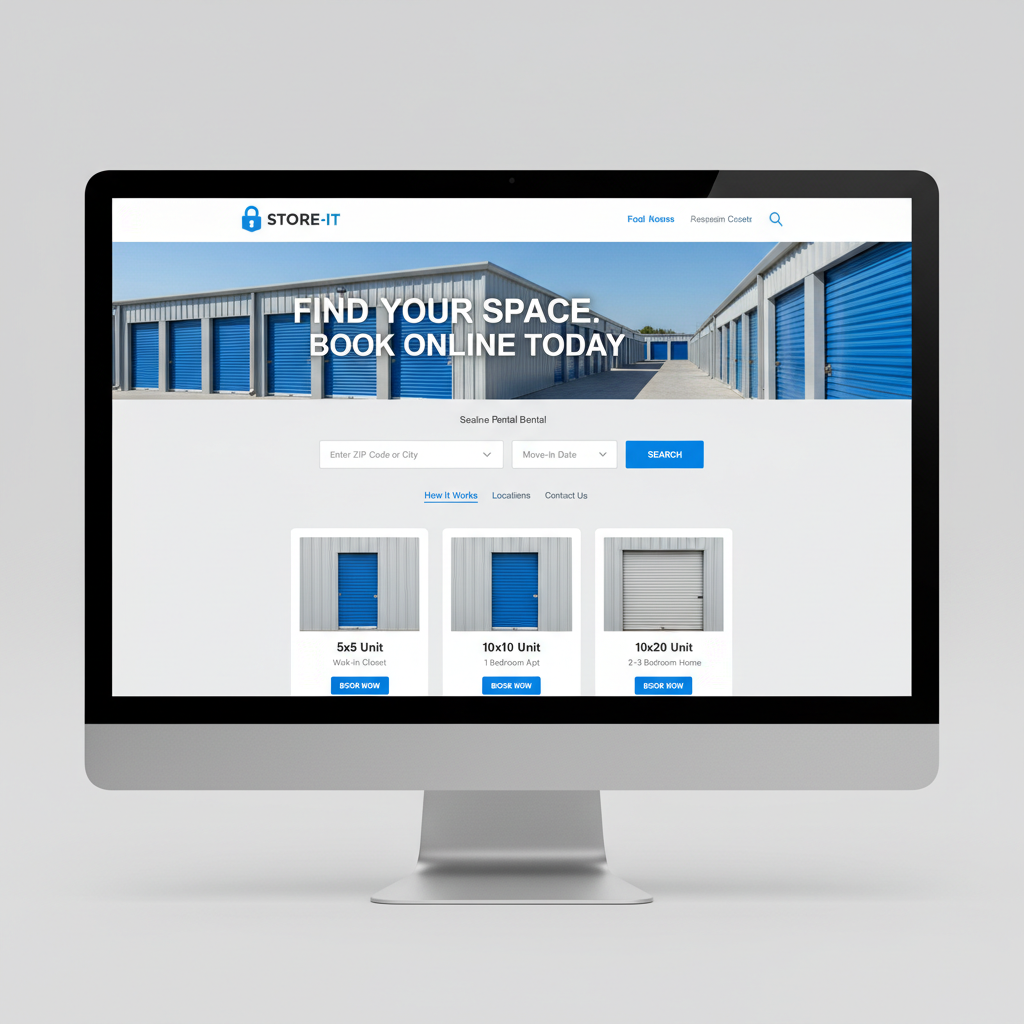
Modern tenants expect the same level of pricing transparency from a storage facility that they get from an airline or a hotel. By 2026, the phrase "Call for Price" or "Inquire for Availability" will function as a digital exit sign. Forcing a prospect to pick up the phone just to learn a base rate creates a friction point that modern users simply will not tolerate. If a website does not provide an immediate answer, the user will move to a competitor who does.
Achieving this level of transparency requires robust API integrations between your website and your property management software (PMS). These integrations ensure that your digital storefront is an exact reflection of your facility's physical inventory. When a unit is rented in the office or through another online channel, it must disappear from the website instantly. This accuracy prevents the logistical nightmare of double-booking and builds immediate trust with the consumer.
Furthermore, real time data is the backbone of dynamic pricing. As occupancy levels fluctuate, rates should adjust automatically to maximize revenue per square foot. In the context of self storage website features 2026, these price shifts must be reflected on the web page the moment they occur. If a tenant sees one price online but is quoted another during the checkout process, the lead is lost. Utilizing specialized web solutions that sync flawlessly with your PMS allows you to implement effective online rental mechanisms. This setup ensures your pricing strategy is both aggressive and automated, allowing you to capture the highest possible rate for every available square foot without constant manual oversight.
3. Advanced Local SEO and Google Maps Optimization
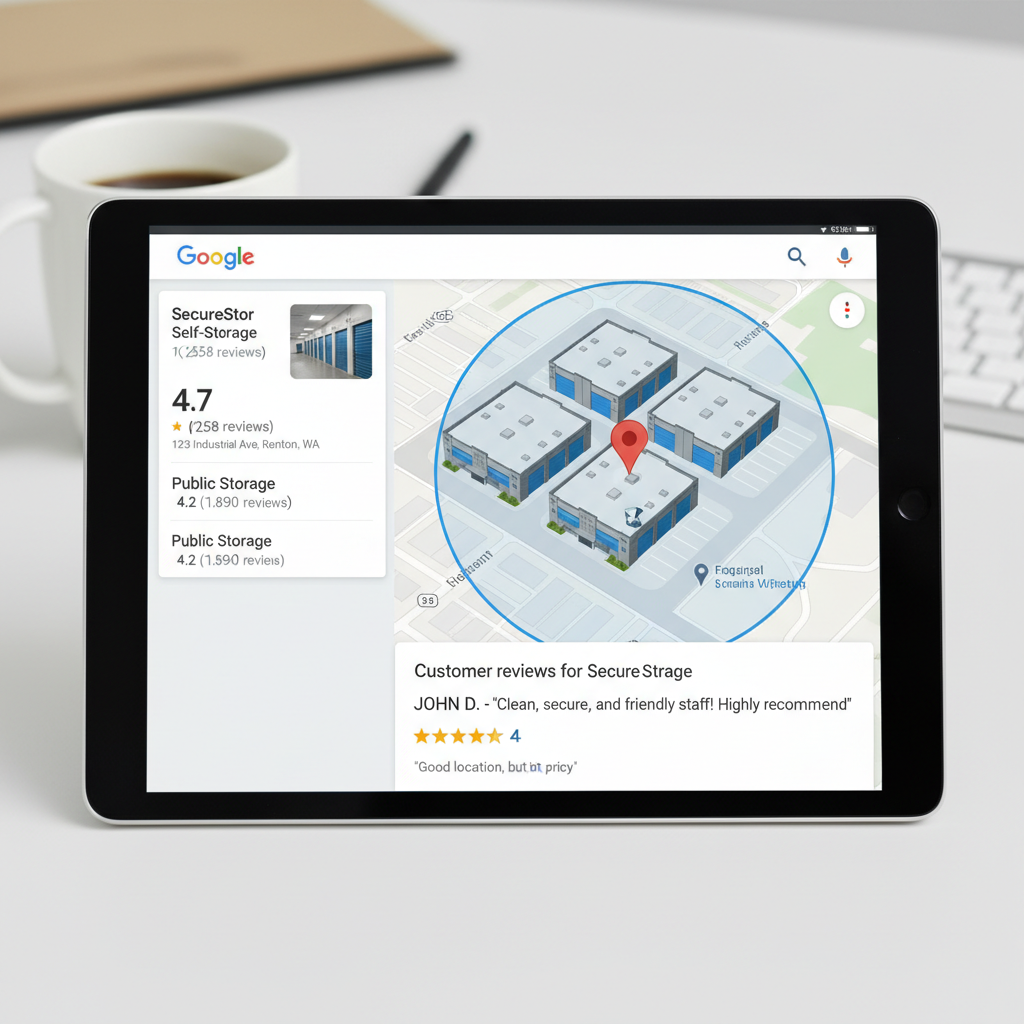
Visibility is the precursor to conversion. If a facility does not appear in the top three results of a local search, even the most advanced pricing transparency becomes irrelevant. By 2026, Google’s algorithms will prioritize hyper-local intent with surgical precision. The search engine is moving beyond general city-wide results to favor businesses that demonstrate a specific presence within a tenant’s immediate neighborhood. This shift makes advanced local SEO one of the most critical self storage website features 2026 requires to maintain a steady lead flow.
Technical execution starts with schema markup, a specific type of backend code that tells search engines exactly what your facility offers. For storage operators, this means implementing LocalBusiness and SelfStorage schema that identifies your physical address, gate hours, and available unit types. Beyond basic code, operators must deploy localized landing pages. Rather than targeting a broad metropolitan area like Boston, these pages should focus on specific sub-markets or landmarks, such as the Seaport District or Fenway. This granularity signals to Google that your facility is the most geographically relevant option for a tenant searching from those specific streets.
Google Maps optimization is equally vital, as the Map Pack often captures the majority of mobile clicks before a user ever reaches an organic website link. Your Google Business Profile must be an extension of your digital storefront. By 2026, the integration of real-time reviews directly into the search experience will be a primary ranking factor. High-velocity, recent reviews act as a trust signal that boosts your map ranking. Utilizing specialized web solutions ensures that your website and Google Business Profile work in tandem, pulling in verified feedback to improve click-through rates. When these technical elements are paired with effective online rental mechanisms, the transition from a map pin to a signed lease is instantaneous. This level of digital visibility ensures that your facility remains the default choice for the local community.
4. Hyper Personalized Tenant Dashboards
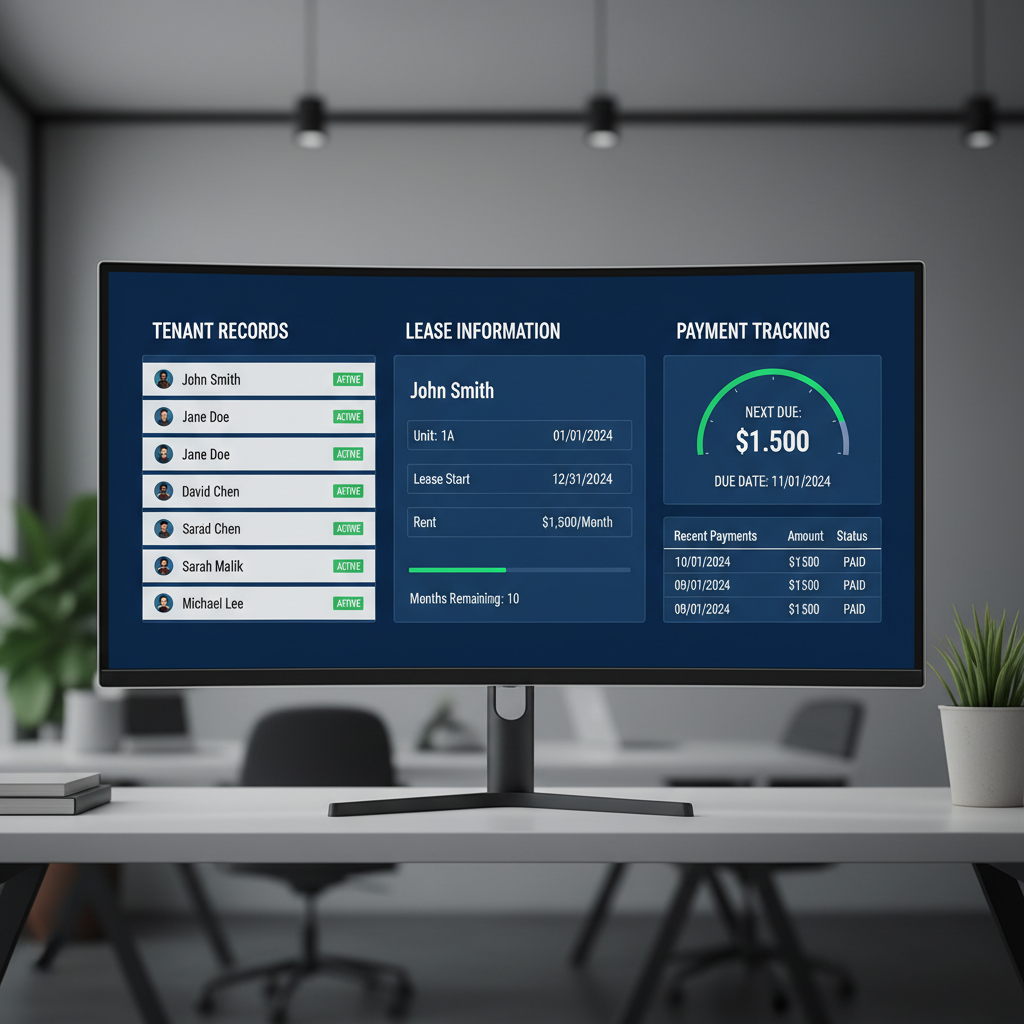
While digital visibility captures the initial lead, the longevity of that relationship depends on the quality of the post-rental experience. As we look at the self storage website features 2026 requires, the focus must expand beyond acquisition to include a hyper-personalized tenant dashboard. This portal serves as a self-service command center where tenants manage their entire account lifecycle without needing to contact the facility manager.
A sophisticated 2026 dashboard provides tenants with total autonomy. Users should be able to view or reset their gate codes, update credit card information for autopay, and download past invoices for their records. One of the most significant shifts is the inclusion of a move-out scheduling tool. Allowing a tenant to notify the facility of their intent to vacate through the website eliminates the friction of a phone call and provides the operator with clear, documented data for turnover planning.
From an operational standpoint, these dashboards drastically reduce administrative overhead. When a tenant can solve a routine issue at midnight, the facility manager does not arrive at the office to a backlog of voicemails regarding lost codes or payment updates. Integrating specialized web solutions that offer this level of depth ensures your facility remains competitive in a market that prizes speed. By leveraging effective online rental mechanisms and pairing them with robust account management, you provide the proactive customer support that modern consumers expect as a baseline. This digital self-sufficiency allows owners to scale their operations without a corresponding increase in labor costs.
5. Interactive Facility Maps and Visual Unit Selection
The final hurdle in a digital rental journey is the uncertainty of the physical space. While a tenant dashboard manages the relationship, an interactive facility map bridges the gap between a spreadsheet of dimensions and the actual unit. Moving beyond a static list view is a core component of the self storage website features 2026 requires. Modern customers want to see exactly where their belongings will live before they commit to a lease.
Interactive maps provide visual proof of value. A tenant can identify if a unit is located near an elevator for easier unloading, situated on the first floor to avoid stairs, or nested deep within a climate controlled hallway. This spatial awareness eliminates the mystery box effect that often leads to abandoned carts. When a prospect can click on a specific door on a digital floor plan, they gain a sense of ownership before the transaction is even complete.
Implementing these specialized web solutions changes the conversion process from a guessing game into a guided experience. This level of detail is particularly effective for large, multi story facilities where navigation can be intimidating for new tenants. By providing a bird's eye view of the property, you remove the physical distance between the user and the facility. Integrating these maps with effective online rental mechanisms ensures that once a user finds their perfect spot on the map, they can secure it instantly. This visual transparency builds the confidence necessary to drive higher conversion rates; it also reduces the workload on site managers who otherwise spend hours giving physical tours to hesitant leads.